
How I wish my mother were alive to read this story.
I remember my great-grandfather vaguely, I met him only once, when I was about 11 years old, but I remember the encounter very well because of the accident that left me without my big toenail.
My mother referred to him as Nono and that intrigued me because nono is an Italian word, but my great-grandfather, I knew, had been born in Portugal. Later when I realized that my grandmother, my mother’s mother, whom I never got to know, was from an Italian family, it was easy to imagine how she referred to my great-grandfather, and that, I believe, is the reason why my mother called him Nono.
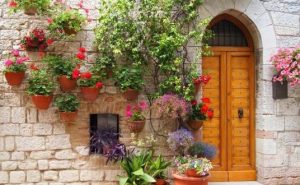
Another trait of my mother’s, which she must have inherited from her mother, was her fondness for flower pots adorning the walls outside the house. Just like it is done in Italy. Some of these vases were made of empty olive oil cans opened horizontally, and the open flap was used to hang them on the wall. It was exactly one of these makeshift pots that was responsible for replacing my big toenail with a new one.
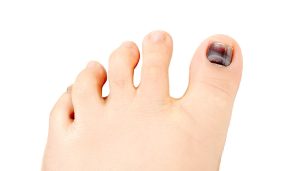
My sisters and I were very excited about the arrival of my great-grandfather and ran to the gate to meet him and holding his hand we led him to the front door of our house. There was a step to enter and I was right next to him, happy, almost trying to enter the door with him. My great-grandfather, for balance, put his hand on one of those vases, the largest of them, which immediately fell off the wall and landed right on top of my big toe. I forgave my great-grandfather immediately, but I have never forgotten his visit.

Much later, when at the initiative of my son, I began to research the origins of our family, poring over the information I had, I noticed that my great-grandfather was younger than my grandfather on my father’s side. I found this mysterious, but the mystery fell apart when I got more information from them. I even wrote a short story about this fact that I published in my book Passion & With.
The biggest mystery about my great-grandfather remained for many, many years. No one knew exactly where in Portugal he had been born. When I finally got his death certificate, I learned that he had been born in the province of São Pedro, but that didn’t help at all, because I couldn’t find any province with that name in Portugal. My research in the archives of Coimbra was also fruitless, where in conversation with my mother she had informed me that my great-grandfather was from.
In recent years, many Brazilians have emigrated to Portugal. Several were unable to settle down, but I learned of a Brazilian lawyer who lives in Portugal, has business in Brazil and helps with research of Portuguese documents. Without much hope, I contracted the services of this lawyer to try to get my great-grandfather’s birth certificate.
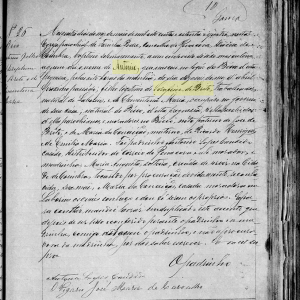
To my surprise, she was not only able to find the exact place where my great-grandfather was born, but also his baptismal records and a baptismal record of a brother of his whom I had never heard of. As is well known, at the time of my great-grandfather’s birth, at the end of the 19th century, there were no civil birth records in Portugal, this was done by the church when the child was baptized.
I learned that he was born in the Parish of São Pedro de Alva, Municipality of Penacova, District of Coimbra, on April 16, 1884, and the baptism is registered in a church with an interesting, almost comical name. Parish Church of Rotten Flour. I intend someday to visit this church to try to understand the reason for this name. I’m sure there’s a story behind it.
But the documents the lawyer had forwarded to me revealed an even greater mystery about my great-grandfather. A mystery that I thought at first, had implications for all their children, grandchildren and future descendants!
How can I explain?
When my great-grandfather immigrated to Brazil, he not only moved to another country, but also changed his family and not only that, his date of birth did not coincide for a few days with the date I had been informed, it was his date of birth. However, the implication for the children, grandchildren, and descendants is that my great-grandfather had a new surname!
At first, I thought that the baptism record found in Portugal was not his. But then, analyzing in more detail the documents that the lawyer sent me, I concluded that without doubt were his.
My grandfather was called Antônio Henrique dos Santos in Brazil, but his baptismal record in Portugal clearly indicated that his father’s name was Serafim (or Seraphim) de Brito. His grandfather was called José de Brito, so how could he have Henrique dos Santos as a last name? It didn’t make any sense.
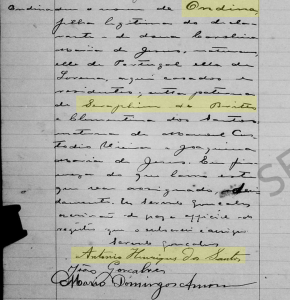
Brito’s surname was not strange to me, I didn’t know why, maybe my mother mentioned it to me once, I don’t know. But it was clear that my great-grandfather’s father was really called Serafim (Seraphim) de Brito when I looked at the details of the birth records of two of his children, my grandfather and my great-aunt, which were written, of course, in the presence of my great-grandfather, who even signed the recorded document. These records indicate that the children’s grandfather, in this case my great-grandfather’s father, was undoubtedly called Serafim (Seraphim) de Brito. It was then clarified and documented who my great-grandfather’s father really was.
But why was my great-grandfather called Antônio Henrique dos Santos and not Antônio de Brito? This needed to be clarified!
To unravel this mystery took a bit of imagination and some evidence
The baptismal certificate of my great-grandfather’s brother, José de Brito, indicates that a certain Justino Henriques dos Santos was the godfather of the baptism, so I believe that there was a relationship in Portugal between the Brito families with the Henrique or Henriques dos Santos families.
At that time, European immigrants who arrived in Brazil through the port of Santos were sent to the Provincial Immigration Accommodation in the city of São Paulo. Looking for the list of immigrants from that entity, I found a family that emigrated from Portugal whose leader was a certain José dos Santos, who came with children, nephews and also a brother. Included in the list is a four-year-old named Antonio, the age of my great-grandfather at the time, and also a nephew surnamed Henrique.
I’m not entirely sure that my great-grandfather was part of this family, but it’s likely. As he was only four years old, it is possible that, even without having been officially adopted, he was registered in Brazil under the name of Antônio Henrique dos Santos. Going further, I can imagine that José dos Santos and his wife Clementina Maria were relatives of Serafim (Seraphim) de Brito, to whom my great-grandfather was entrusted, when they decided to immigrate to Brazil.
I’ll never know for sure what led my great-grandfather to change his last name, but it’s clear that when he arrived in Brazil, he changed countries and also his family.
Anyway, I prefer my great-grandfather Brazilian surname because Antônio Henrique dos Santos sounds much better than Antônio de Brito. But I really prefer to call him Bisnono, to follow the Italian tradition.
There is still one last mystery about my bisnono that I think will be difficult to unravel.
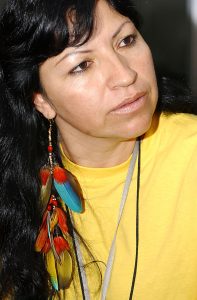
My grandmother whom he married when he was only eighteen years old, as far as we know, was either a Brazilian Indian or the daughter of Indians. Nowadays we no longer call Brazilian Indians or even Amerindians, but original peoples. It makes no difference to me. I am very proud to have a little blood of the peoples who inhabited Brazil before the arrival of the Europeans. I am certain of this ancestry because the result of a DNA test that my son and I did clearly shows that a small part of our DNA comes from America.
My son and I would very much like to know more details about my grandmother and her family, the tribe to which the family belonged, the language they spoke, the history of the ethnicity, however very little, almost nothing, of the indigenous families is documented, hence the difficulty.
Who knows, maybe someday we’ll unravel this other mystery of my great-grandfather.
Do you have a story to tell? Send us an email and we will publish.