
The statement made by Argentine President Alberto Fernandez when he received a visit from Spanish Prime Minister Pedro Sanchez in June 2021 caused an extreme furor throughout Latin America and Europe.
 During a meeting with Pedro Sanchez at the Casa Rosada, the Argentine government house, perhaps to try to demonstrate the bonds of union between Spain and Argentina, the Argentine president, quoting the poet, Mexican Nobel laureate Octavio Paz declared: “The Mexicans came from the Indians, the Brazilians came from the jungle, but we Argentines came from the ships. They were ships that came from there, from Europe. And that’s how we build our society.”
As far as is known, Octavio Paz did not leave anything in writing similar to Fernandez’s statement. People close to Octavio Paz claim that he used to say jokingly, “Mexicans descend from the Aztecs, Peruvians from the Incas, and Argentines… from the ships.” In this expression attributed to the Mexican, Brazilians are not mentioned.
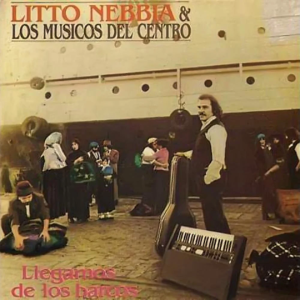 In fact, Fernandez’s phrase comes from an excerpt of a song by the Argentine Litto Nebbia, recorded in 1982, perhaps inspired by Octavio Paz’s jokes. The lyrics of the song say: “The Mexicans came from the Indians, the Brazilians came from the jungle, but we Argentines came from the ships.”
Argentine journalists immediately criticized the president, pointing out the error in the attribution of the phrase, but descendants of the Argentine native peoples were the ones that criticized the most, feeling once again discriminated. As is well known, Argentina has a significant indigenous population, especially in the northwest of the country, in the provinces of Jujuy and Tucumán. Is there anyone who thinks that the family of Mercedes Sosa, the most famous Argentine singer-songwriter, emigrated from Europe to Argentina?
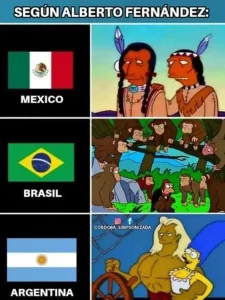 There was some reaction in Europe and also in Mexico for the ill-considered speech of the Argentine president, but the strongest reaction came from Brazil.
In Latin America, Argentines have a reputation for thinking they are superior to others. In Brazil, this is exacerbated by the soccer rivalry and even more so by many racist Argentines calling Brazilians monkeys, as can be seen by some of the memes that circulated after the disastrous speech of the Argentine president.
I have little information about my maternal great-grandmother. Apparently, she was the daughter of Brazilian Indians or, as it is said today, a descendant of native peoples, most likely from one of the Guarani, Kaingang or Xetá tribes. I have always been very proud of having at least a small percentage of indigenous blood, and I would love to know more about my ancestors who populated Brazil before the arrival of Europeans.
So yes, some of my ancestors did indeed come from the forest. I know very well what the north of the state of Paraná was like in Brazil, where the tribe of my grandmother’s family undoubtedly lived in times past. It was covered with dense forests.
Contrary to what the Argentine president said, most Brazilians did not come from the jungle.
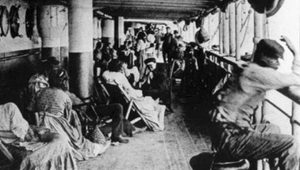 They came from ships not only from Europe, but from all over the world. No doubt, they came from several European countries, but also a large contingent came from various countries in Africa on ships, as slaves. They also came from ships from various countries in the Middle East and many countries in Asia, especially Japan. Brazil now has the largest population of Japanese descendants outside of Japan. It is curious to see a person with an oriental countenance speaking Brazilian Portuguese and dancing samba.
Those who came from the forest and some who still inhabit it today are a relatively small part of the total Brazilian population. Very important is that today’s Brazilians are a mixture of various peoples of the world. In Brazil you can find people from all corners of the earth, intermixed. It’s a pity that nowadays politicians in Brazil preach more the separation of peoples and races than the integration of Brazilians.
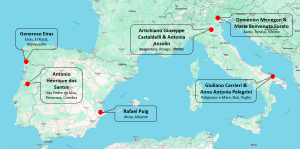 In the case of my family and my wife’s family, the vast majority of our ancestors came from Europe, specifically Portugal, Spain and Italy. I have spent a lot of time looking for the places where they came from and I have been able to find the birthplaces of several of my and my wife’s grandparents and great-grandparents.
These people did come by ship to work the land. They did not come from major European urban centers. They came from small rural villages, to cultivate the Brazilian land, to plant, especially to plant coffee. They left everything behind, they took risks, they didn’t have an easy life, far from it, they immigrated to replace slave labor.
I am also very proud of them.
Do you have a story to tell? Send us an email and we’ll publish.