
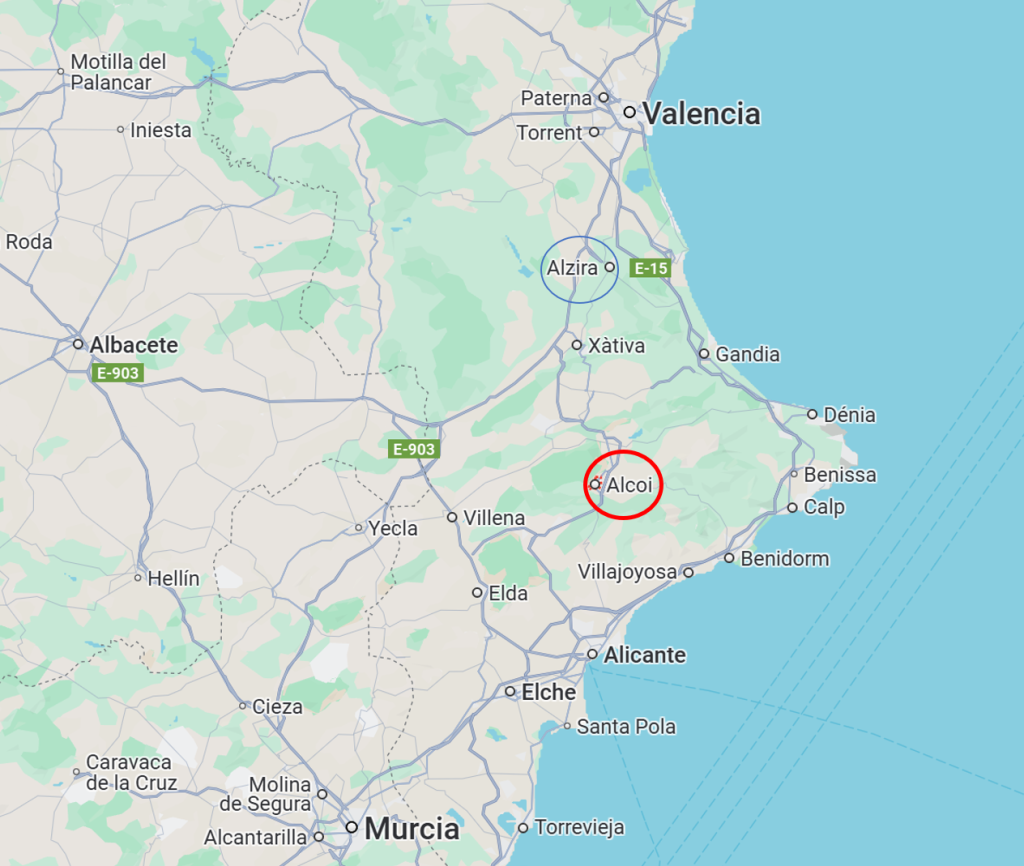
I’d never heard of Alcoi, whose name in Arabic means the camp, which lies between Valencia and Murcia in the province of Alicante in Spain and is part of the Valencian community, until I discovered that my wife’s grandfather had been born there. Where her grandfather was born was a mystery that had haunted us ever since we got married. Everyone in the family knew he was from Spain. His death certificate states that he was from Valencia, nothing else, not even his date of birth is on the document.
We visited Valencia for the first time in the hope of finding his birth certificate there. But there was nothing in Valencia’s civil registry, which contains registration books for the city and surrounding towns. Therefore, it became clear that my wife’s grandfather had been born in some village in the Valencian community. A needle in a haystack, because the Valencian community is huge, with many towns and villages, all of which have at least one civil registry, and in the larger towns there is even more than one.
On our second trip to Valencia, we visited some nearby towns, including the town of Alzira, the subject of another post on this site. We also found nothing in the civil registry of Alzira and practically gave up hope of finding out where my wife’s grandfather had actually been born.
Until, once again, the Mormons helped!
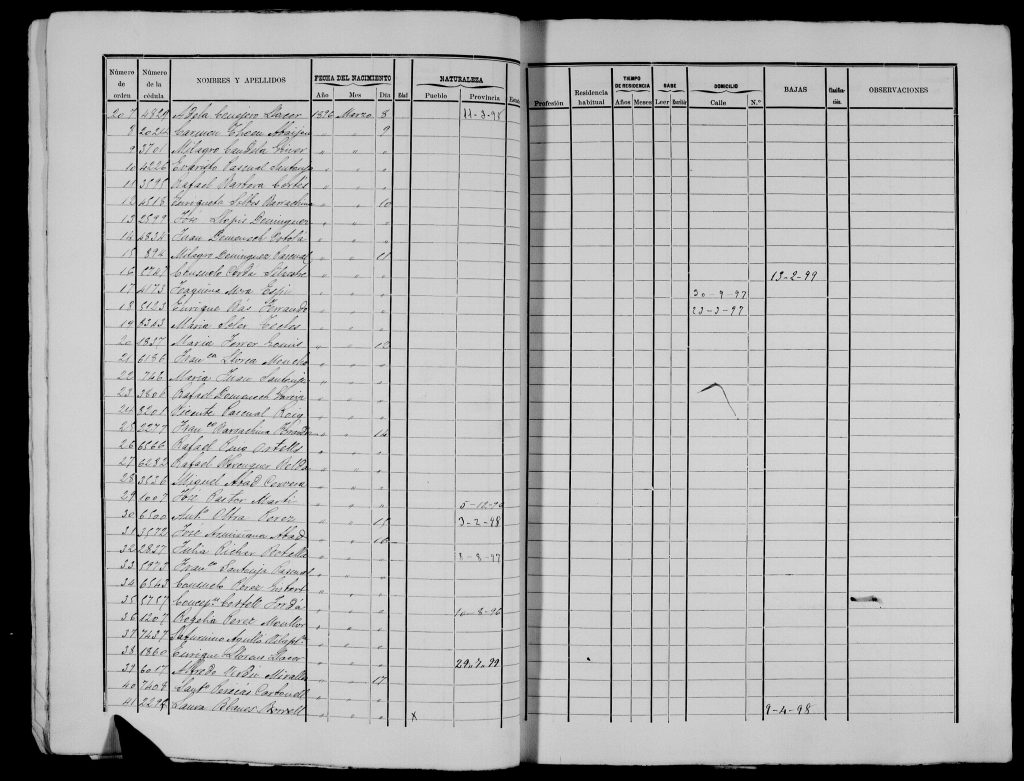
I don’t know exactly why, but one day while researching something about Spain I came across the Mormon website once again, and luckily, I was able to access the Valencian community’s census files. As far as I know, the Mormons couldn’t copy Spain’s birth records, but tenacious as they are, they managed to scan old census records. Even more fortunately, the record book I found was in alphabetical order and contained the person’s name, date and place of birth.
Was common knowledge in the family that my wife’s grandfather emigrated to Brazil when he was 17 or 18. The census date I was looking at was when he would have been about 13 or 14. That’s when I found his name!
The date of birth was practically the same and his mother’s name, which in Spain, as you know, is part of a person’s name, was very similar to his. Importantly, the census was for the town of Alcoi.
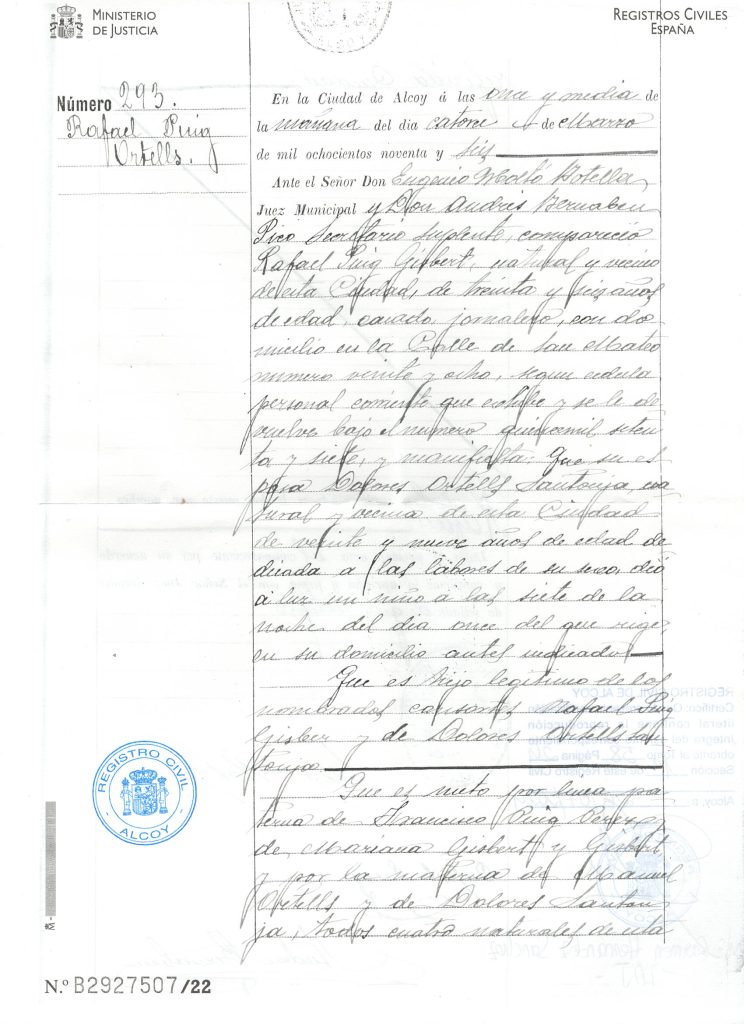
Everything indicated that I had finally found a specific clue about the mysterious Spaniard. All that remained was to obtain the birth cerificate to prove that the person in the census was in fact my wife’s grandfather.
This was a difficult step because Alcoi’s civil registry is not one of the most efficient, given its poor rating on Google. After several attempts by phone, email, visits and requests to the civil registry’s website, we finally received the birth record. It was no doubt my wife’s grandfather.
Well then, case closed?
Of course not!
At the beginning of this year, we visited Valencia once again and after an hour and a half on the intercity bus, we arrived in Alcoi, and due to the bus’s return time, we only had a few hours to visit the city.
When we got off the bus, we immediately thought about going back. A cold wind enveloped us, crushing our bones.
We tried to find out where the city center was and asked several people. It was far away. We tried to call an Uber, but there were no Ubers or taxis.
After a long walk, frozen, practically regretting having tried this adventure, we found a taxi rank and immediately climbed into the car in front, scaring the driver who seemed absorbed, perhaps even taking a nap. The conversation that followed went something like this.
“Good morning!”
“Good morning,” replied the taxi driver and, starting the car, asking, ”Where do you want to go?”
“Sir, let me explain. We have no destination.”
“No destination?” The taxi driver asked, perplexed.
“Yes. Look, it’s now 11 o’clock, we have to take the bus back to Valencia at 2:45, so during that time we’d like you to show us all about Alcoi.”
The driver didn’t hide his joy. I don’t think he gets runs like that very often.
We were happy too. The taxi was heated and that warm air began to melt the layer of ice that had formed on the marrow of our bones.
The taxi driver proved to know all about Alcoi, and informed us that the town has a stable population of around 60,000 people, which has remained at this level for decades.
He first took us to the top of one of the many mountains that surround the town so that we could see the city from high up. On top of the mountain, we found the remaining of an old prevention institute for tuberculosis patients, now discontinued, called “Preventorio de Alcoy”. It was built there because the air is fresher and to separate the sick from the townspeople at a time when there was no effective cure for this disease.
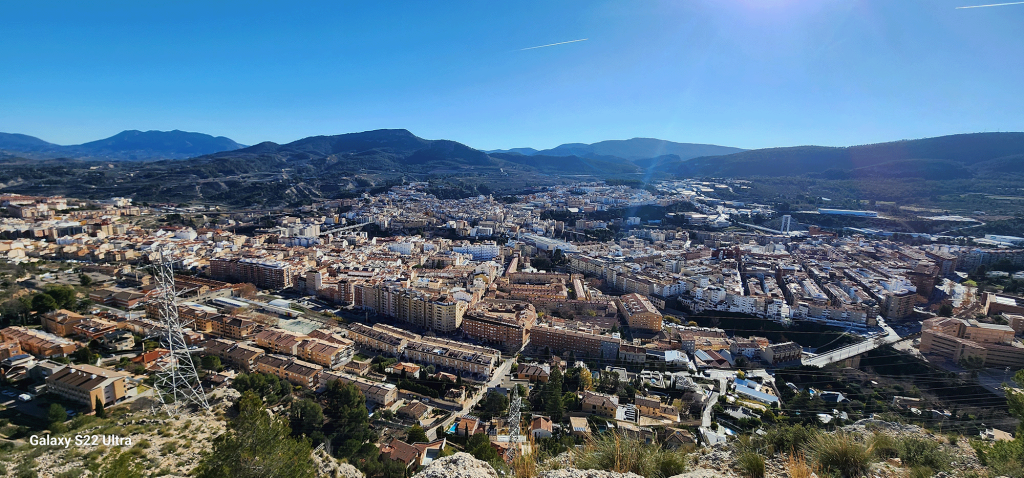
Next to the “preventory” is the Ermita San Cristóbal and the Mirador de las Buitreras, which gives a full view of the city. We were told by the driver that Alcoi is nicknamed the city of bridges because the city has a large number of them, which we could easily see from where we were. Alcoi has around 40 bridges due to the confluence of the Riquer, Benisaidó and Molinar rivers, tributaries of the Serpis river, which pass through the town.
From the viewpoint, we went down to the town, visited some of the bridges and also the central part of the town. There, the driver told us that Alcoi had long been an important center of the Spanish textile industry, with several factories built near the rivers. This led us to think that my wife’s grandfather might have worked in one of these factories before venturing across the Atlantic and settling in Brazil.
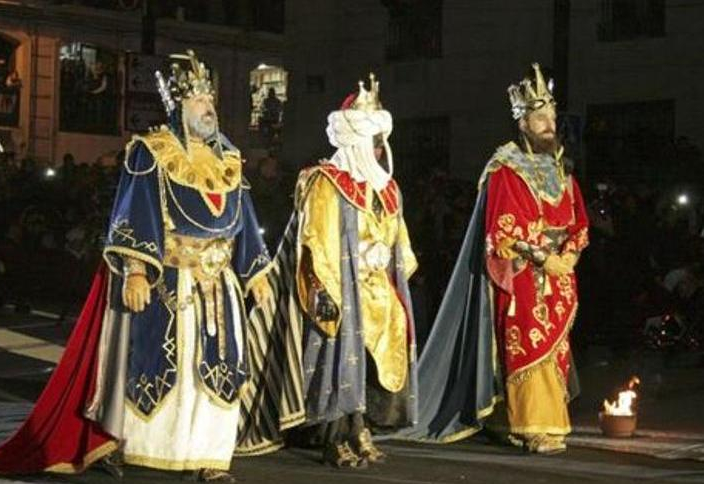
We learned from the driver that Alcoi is a city of festivals that the locals like to celebrate. Among the most important festivals are the feast of the three kings, the moros and cristianos, i.e. the fight between Christians and Muslims, and the “fallas”, which is a bonfire festival. Don’t forget to read the post on this site called “Alzira’s Ninots de Fuego” to get a better understanding of this festival, which is celebrated in many towns of the Valencian Community.
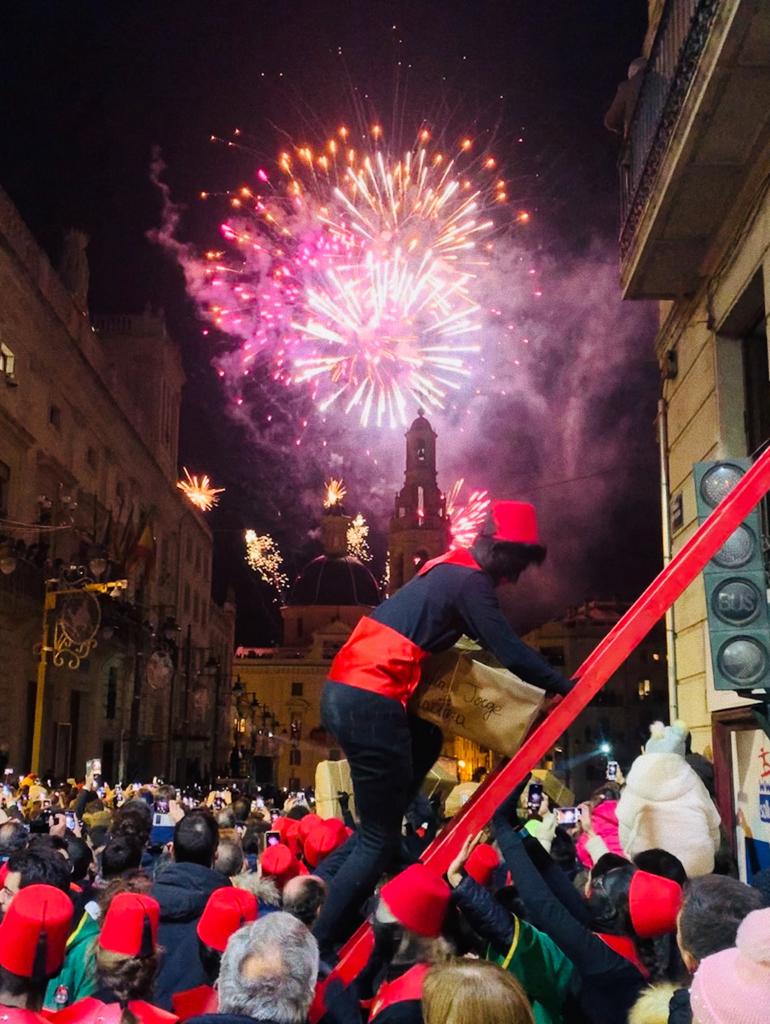
We were halfway through January and the town was still showing off its decorations for the feast of the three kings. We were struck by the fact that some of the windows of the buildings had a doll imitating a black person attached to them. We later learned that these were the “pageboys” of the kings, who were tasked with delivering the gifts to the town’s children and came armed with ladders to climb the façade of the buildings. We found this memorable, because nowadays, surely somewhere else this display would be considered racist, and also because in our tradition, that is, mine and my wife’s, Christmas presents are delivered in person by Santa Claus.
The so-called “cavalcade of the kings,” is impressive. It’s like a samba school parade. Each king comes with his entourage, all decked out in envious costumes. They are joined by pageboys to deliver the gifts.
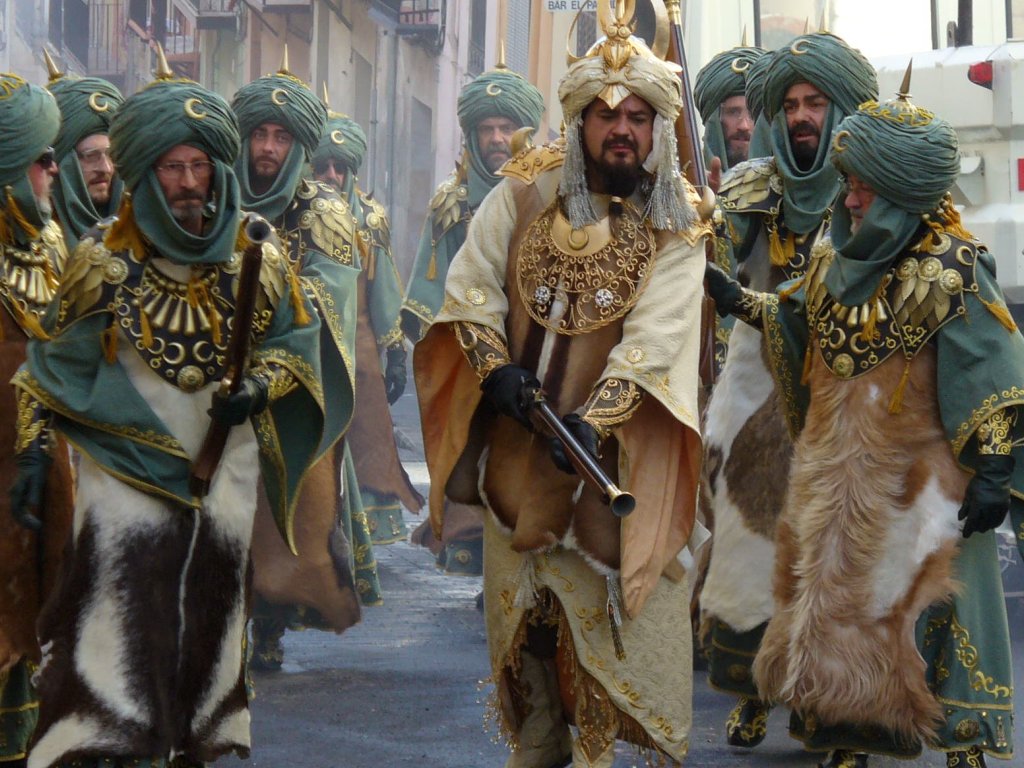
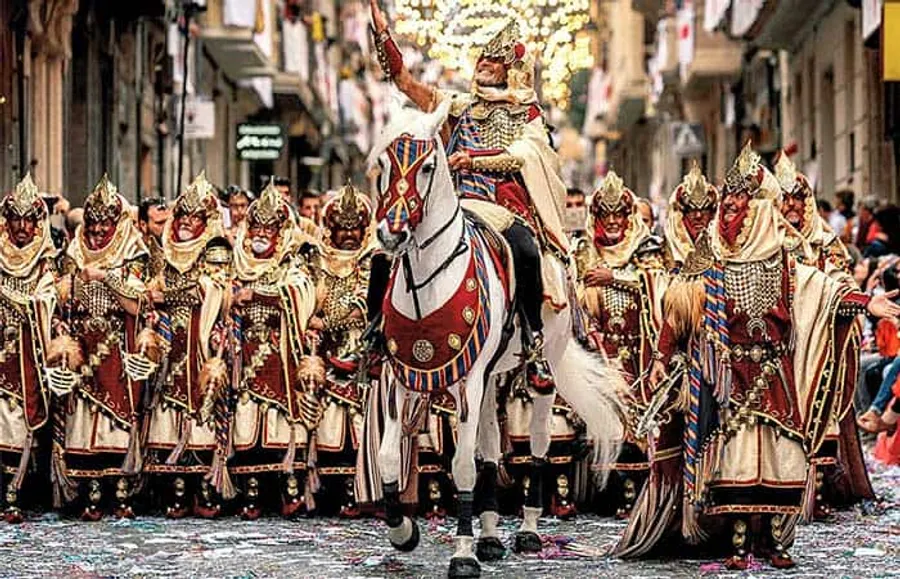
The “moros e cristianos” or moors and christians party is even bigger. Several groups, looking like samba school wings, dressed as Arabs and Christians parade through the city until they meet in hand-to-hand battles with swords and sabers. It’s an impressive party.
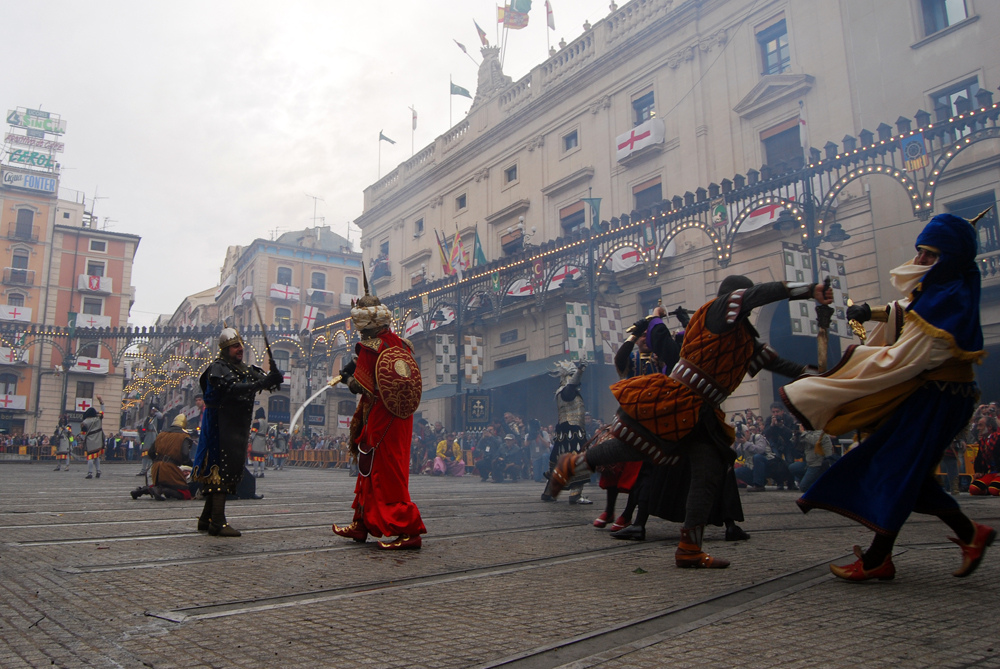
As we were in the center, we decided to visit the archaeological museum of Alcoi, which was nearby. It was a very impressive visit. We learned from the archaeological records that the caves around the town were used 60,000 years ago, or perhaps even earlier, by hunters, ancestors of today’s humans, such as Neanderthals and pre-Neanderthals. The museum, however, shows much more, objects and studies about the various peoples who passed through the region. Many civilizations have passed through Alcoi, such as the Iberians, Phoenicians, Carthaginians, Romans, Alans, Visigoths, Byzantines and Muslims who were expelled from the region in 1276 by Jaime I of Aragon after several battles with the Arabs. These battles, which lasted for years, are the inspiration for the “moros y cristianos” festival.
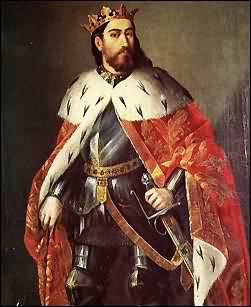
The urban core of the city began twenty years before the expulsion of the Arabs, shortly after James I began the wars of Reconquest in the region.
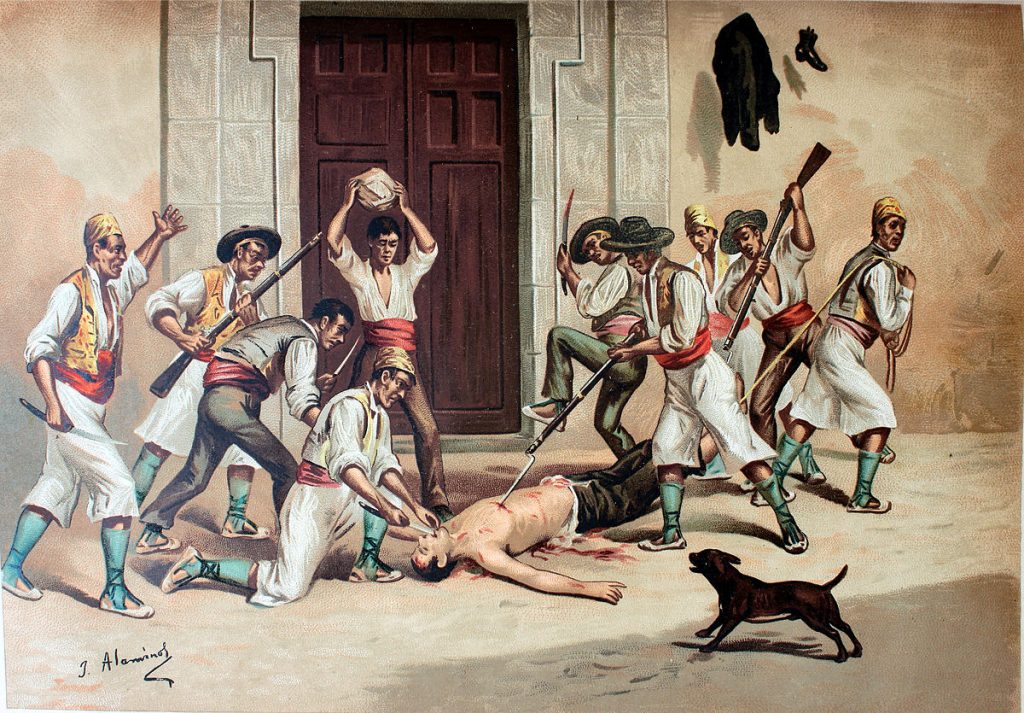
An interesting historical fact and a curiosity about Alcoi was the so-called “Revolució del Petroli ,” the Oil Revolution, where for a few days Alcoi became in practical terms, an independent country. It happened in 1873, when the mayor ordered the firing on the city’s factory workers who were on strike. The angry workers stormed the town hall, killed the mayor and mutilated his corpse. Alcoi declared itself independent and was governed by committee from July 9 to 13, 1873, until the arrival of federal troops that put an end to this separatist adventure.
Unfortunately, our time in Alcoi was up and we could only stop for a coffee and a “bocadillo de jamón,” an Iberian ham sandwich, to chat a bit more with the driver. He soon dropped us back at the bus station
The Alcoi of today has an immense wealth of civilizations who have passed through it over the centuries. It’s a shame we had so little time to explore the city and its culture. We want to go back.
Do you have a story to tell? Send us an email and we’ll publish it.